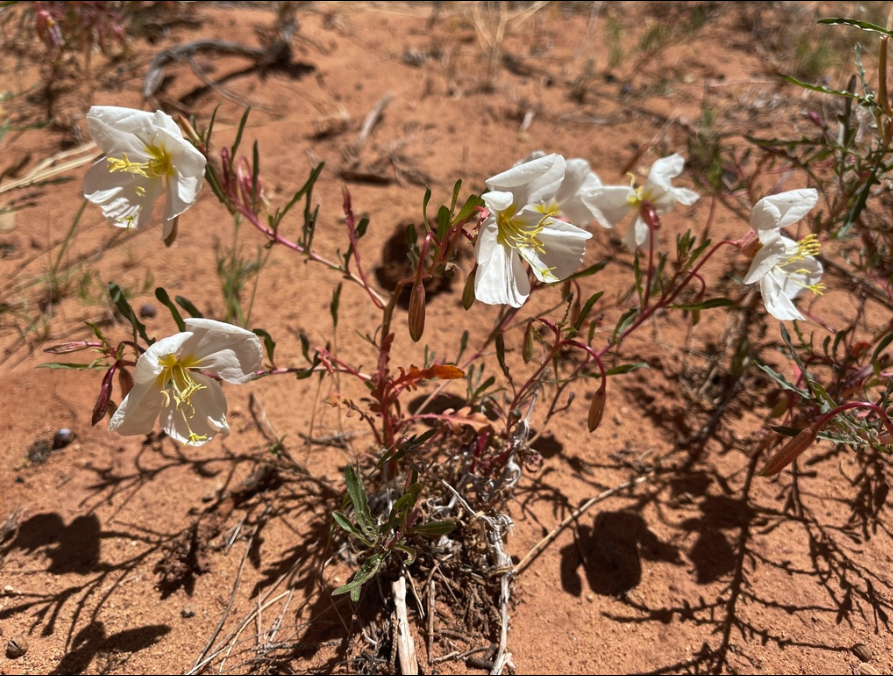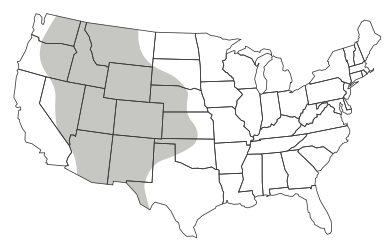
Pale Evening Primrose (Oenothera pallida) is a perennial forb native to Western US states (such as Washington, Oregon, Idaho, Nevada, and Utah) that can thrive in USDA Zones 4–8. Reaching a mature height of 1–2 feet with a creeping, rhizomatous spreading growth habit, it features white-barked stems with deeply lobed blue-green leaves and produces large, fragrant white four-petaled flowers that age to pink. It thrives in dry, loose sandy soils, sand dunes, and gravelly desert washes in full sun and is ideal for sand dune stabilization, sandy wind erosion control, and hawkmoth support.
Rhizomatous native perennial with showy white flowers and yellow centers, blooming April to September. Drought tolerant, occurring on dry, sandy or gravelly soils and dunes in desert shrub and open woodland habitats; up to 9,000 ft. elevation. Useful for restoration, erosion control and beautification. Pollinated by hawkmoths and bees.