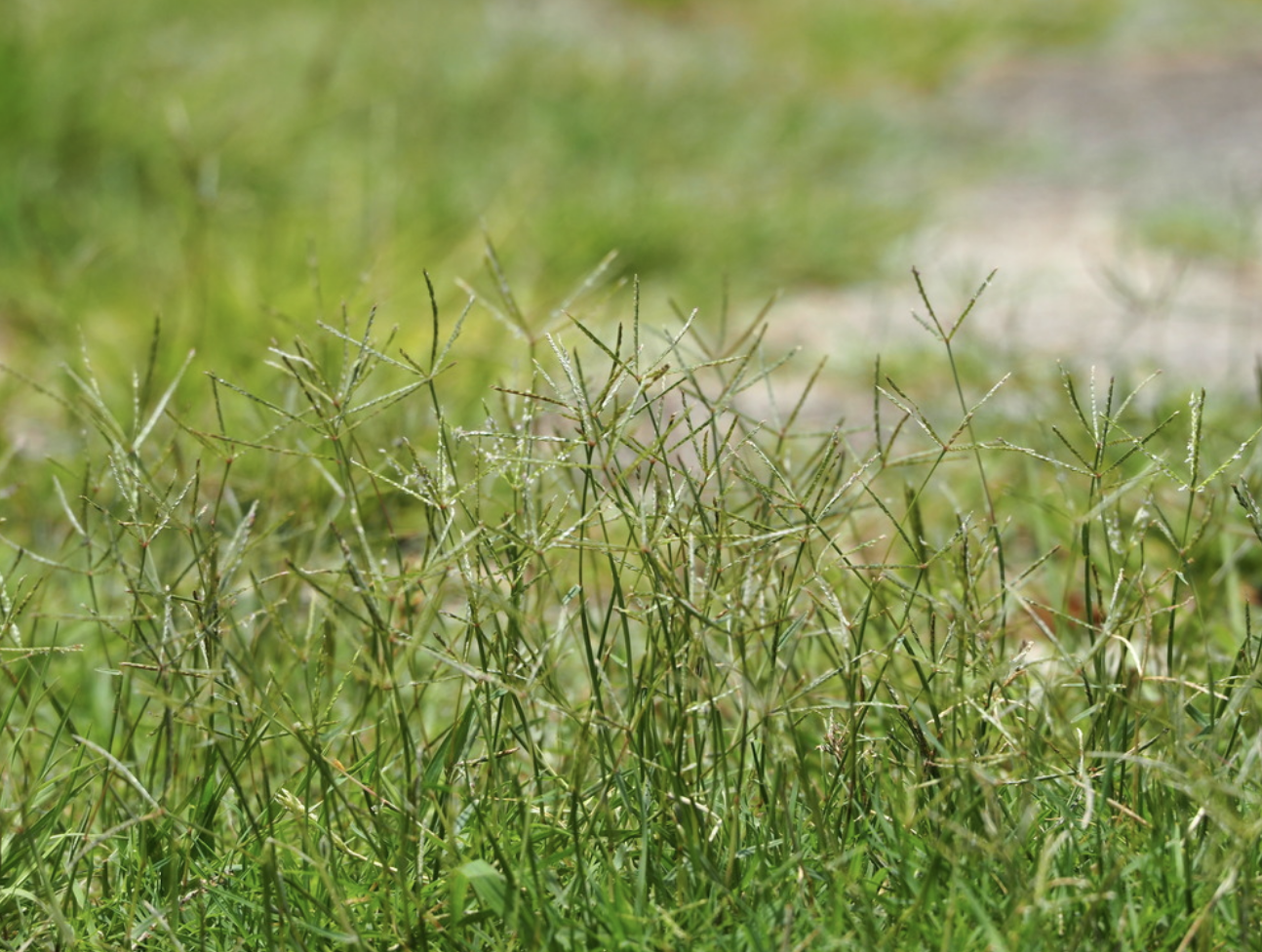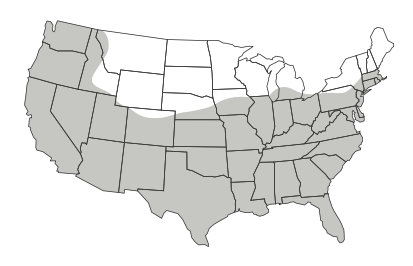
Common Bermudagrass (Cynodon dactylon) is a perennial grass native to southern US states (such as Texas, Georgia, Florida, and California) and has also been successfully introduced across North America as a non-invasive turfgrass that can thrive in USDA Zones 7–11. Reaching a mature height of 4–12 inches with a creeping, stoloniferous and rhizomatous sod-forming growth habit, it features fine-textured green leaves and produces finger-like seed spikes. It thrives in a wide range of well-drained soils in full sun and is ideal for commercial turf cover, highway right-of-way stabilization, and high-traffic erosion control.
Southeast, Midwest, Southwest, Intermountain West, California, North America, Pacific Northwest
Warm season, long-lived, perennial that spreads from rhizomes and stolons forming dense patches. Adapted to a wide variety of sites, including saline soils. Widely used for erosion control and as highly palatable forage for livestock, but may be an aggressive invader. Listed as noxious in some states. Used also as a turfgrass in the south.
Species Attributes
Seeds Per lb
2000000
Growing Region
Southeast, Midwest, Southwest, Intermountain West, California, North America, Pacific Northwest
Native
Introduced
Life Form
Grass
Life Cycle
Perennial
Light Requirements
Sun
Precipitation Requirements
Low
Mature Height
1-2 ft
Flowering Season
Cool/Warm Season
Warm
Bloat/Non-Bloat
Bloom Color
Bunch/Sod
Sod
Experts in providing seed and erosion control solutions for a wide range of applications. Visit our parent company The NativeSeed Group.